Enhancing the Neston and Parkgate Ghost Walk Through Data, Design and Projection
When Neston Players commissioned us to support the visual design of a community ghost walk, the brief extended far beyond producing a set of illustrations. The challenge was to create a complete visual language that could connect actors, locations, stories, projections, maps and printed materials into a single immersive experience.
The project combined open geographic data, digital art, animation, projection mapping, fabrication and storytelling. It became a good example of how creative technology can help bring a place and its history to life.
Mapping the Story
The process began with understanding the route itself.
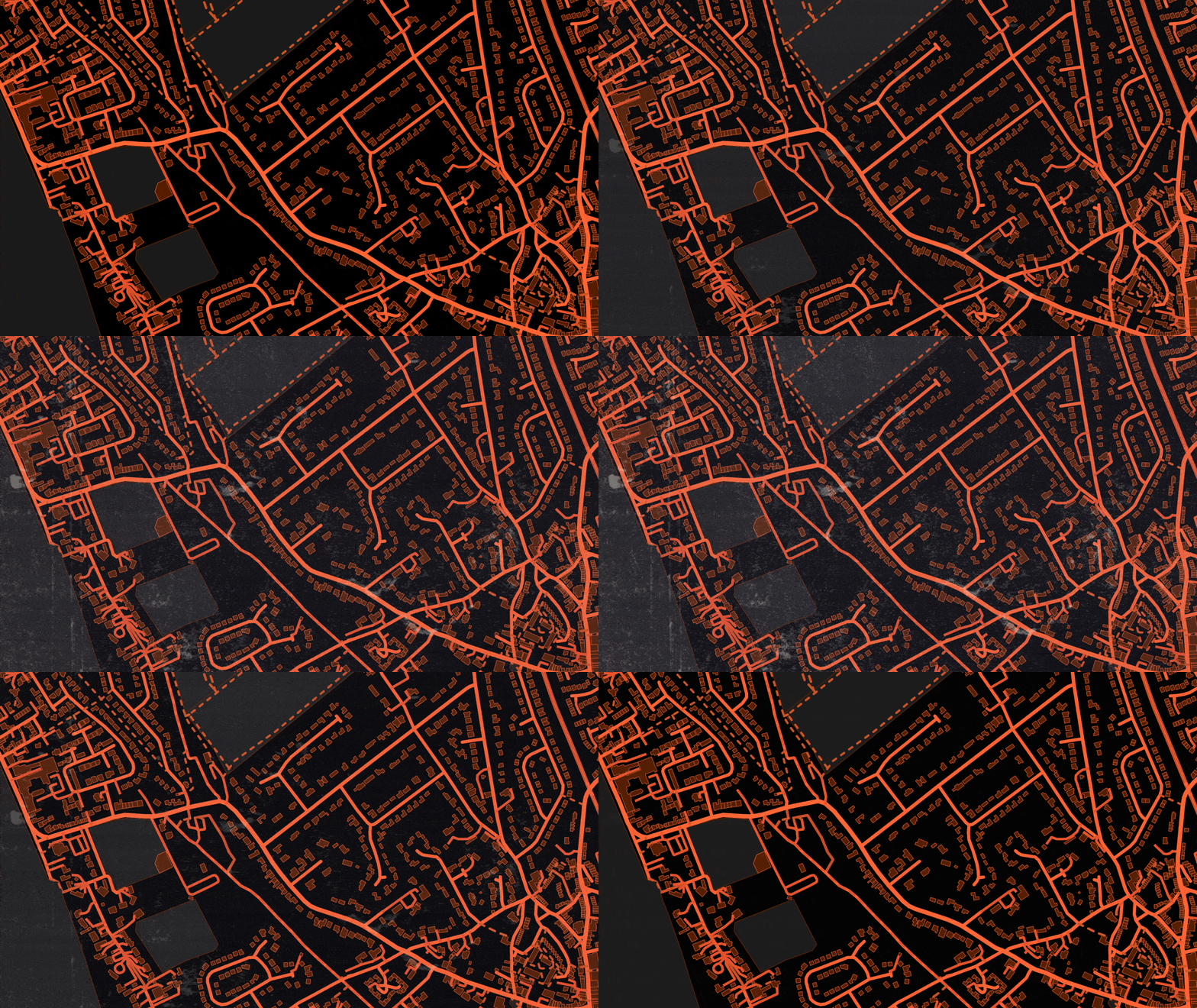
Using open geographic data and QGIS, we created detailed maps that helped organisers plan the experience while providing visitors with a clear sense of place. Rather than treating the route as a backdrop, we used mapping as a storytelling tool, connecting locations to the historical events and characters featured throughout the walk.
Designing the Ghosts
Each ghost required its own visual identity.
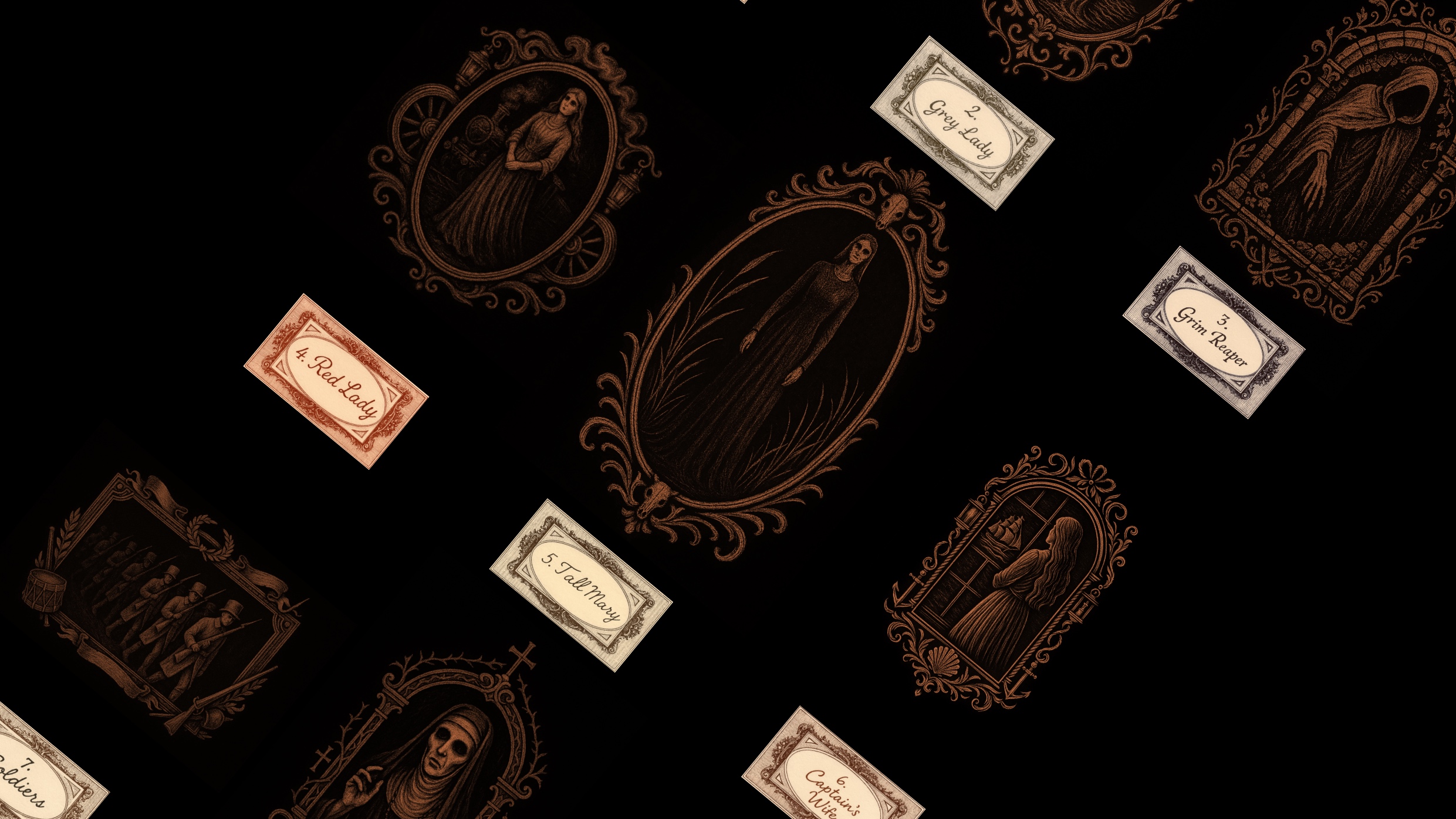
Working closely with the organisers, we developed a collection of characters that reflected the stories being told. These illustrations became the foundation for everything that followed, appearing across programmes, projections, signage and installations.
Maintaining consistency was important. Whether visitors encountered a ghost on a printed map, projected onto a building or hanging in a frame on a pub wall, it needed to feel like part of the same world.
Bringing Characters Into Physical Space
One of the most rewarding aspects of the project was finding ways to move beyond traditional graphics.
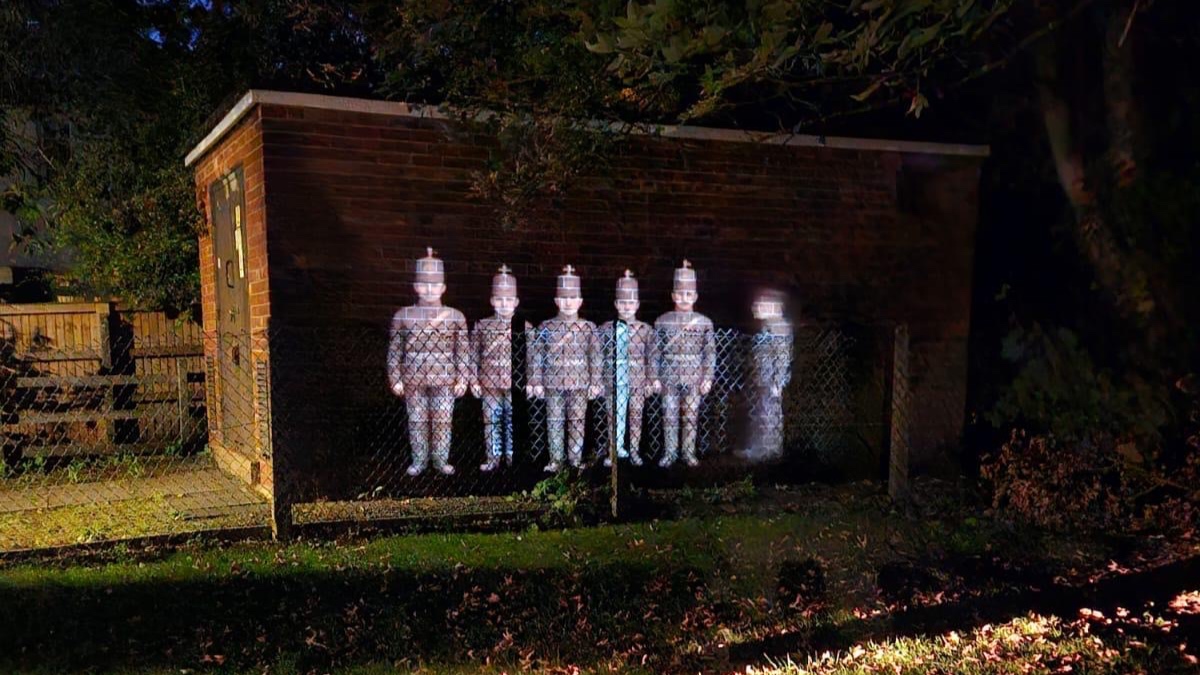
We created a series of animated projections that appeared along the route itself. Historic figures emerged from walls, spectral forms appeared in unexpected locations and atmospheric effects helped transform familiar spaces into part of the story.
Mist was projected beneath a bridge to create an unsettling atmosphere. Elsewhere, soldiers appeared on the wall of a former service station, tying directly into the narrative being told at that location.
These installations were designed to complement the live performers rather than replace them, adding another layer to the audience experience.
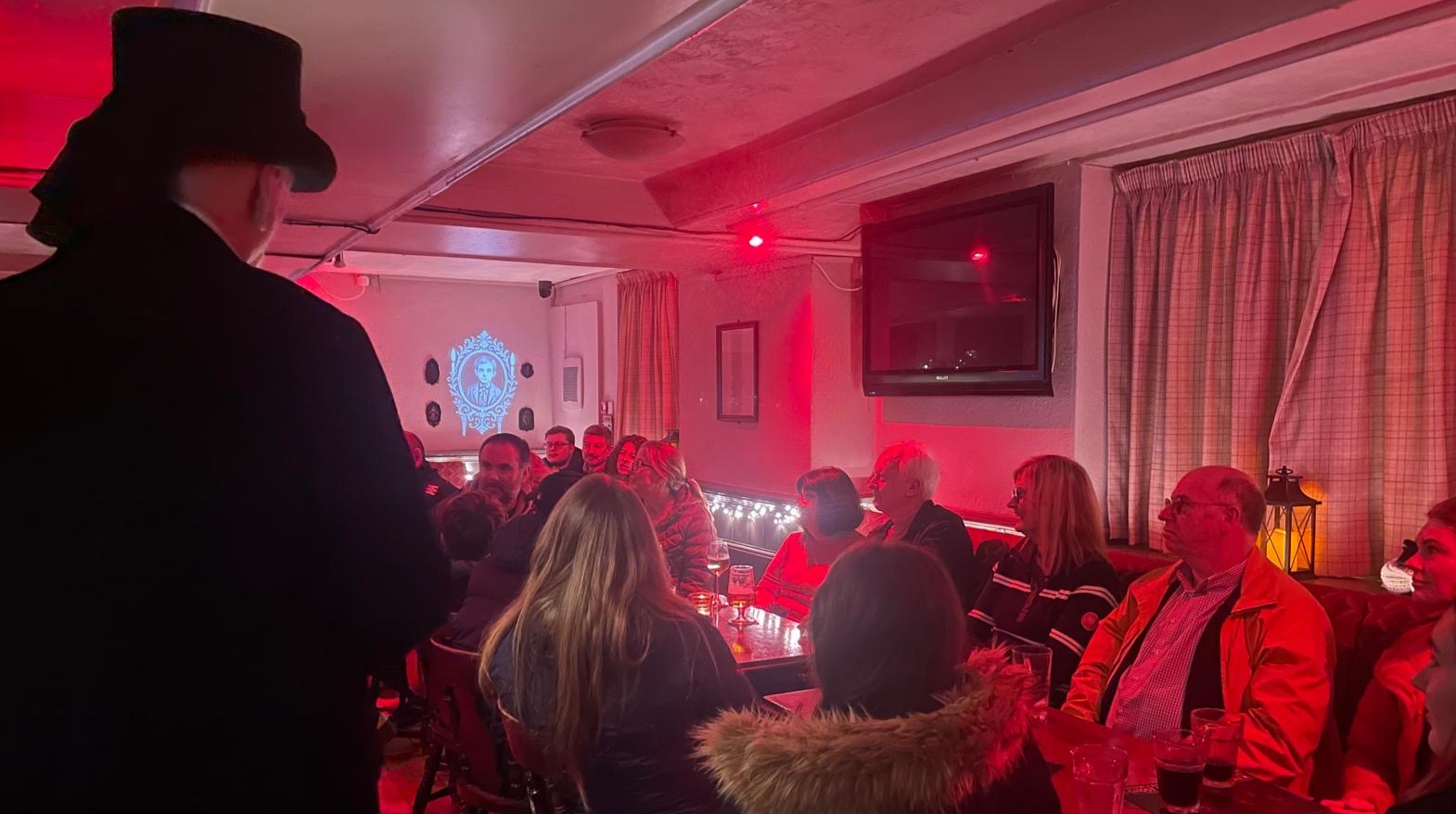
Henry in the Pub
The centrepiece of the visual experience greeted visitors before the walk had even begun.
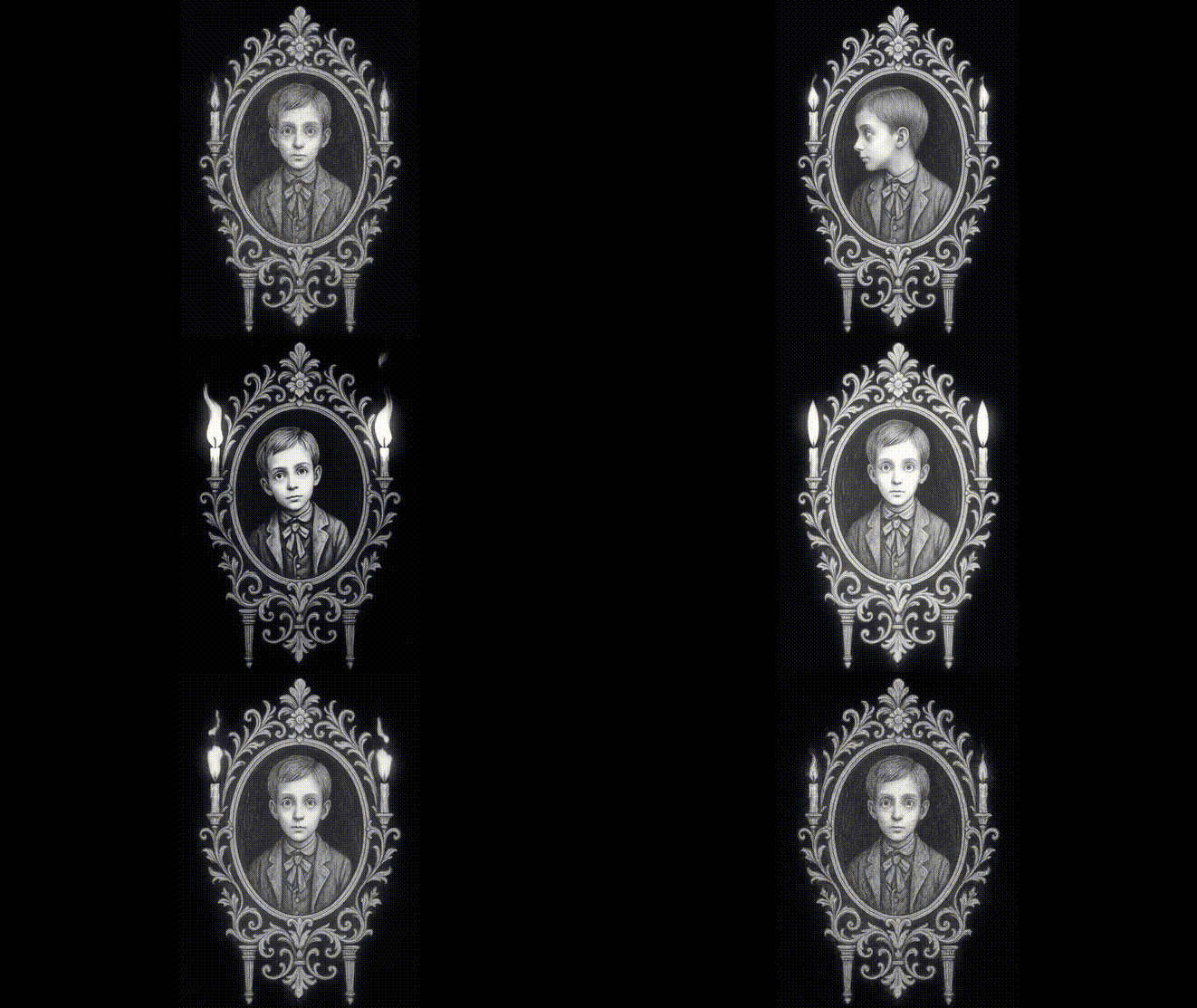
Inside the pub, an animated portrait of Henry — the first ghost encountered in the story — appeared within a bespoke frame mounted on the wall. While the audience gathered, Henry subtly moved and watched from his frame, becoming a living part of the environment.
To support this installation, we designed and produced custom 3D-printed frames and created a collection of smaller ghost portraits that surrounded the main display. Together they formed a permanent visual installation that blurred the line between set design, animation and storytelling.
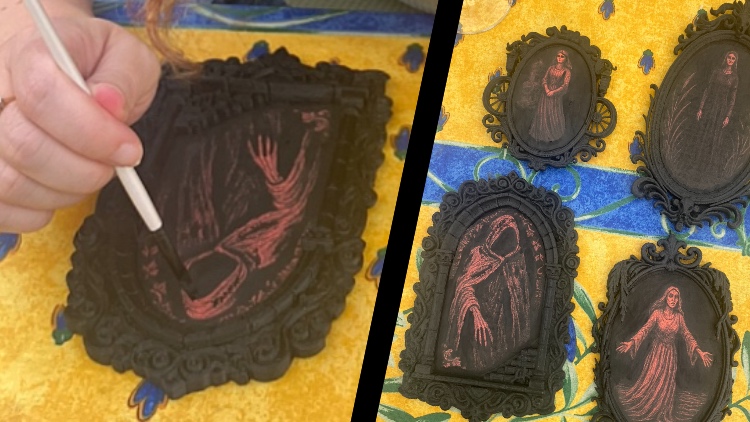
Combining Open Tools and Emerging Technologies
The project brought together a wide range of creative and technical tools.
Open-source software such as QGIS played a key role in route planning and map creation. Python supported parts of the production workflow, while generative AI techniques helped accelerate elements of concept development and image-to-video experimentation.
Rather than focusing on any single technology, the aim was to use the right tool at the right moment to support the story.
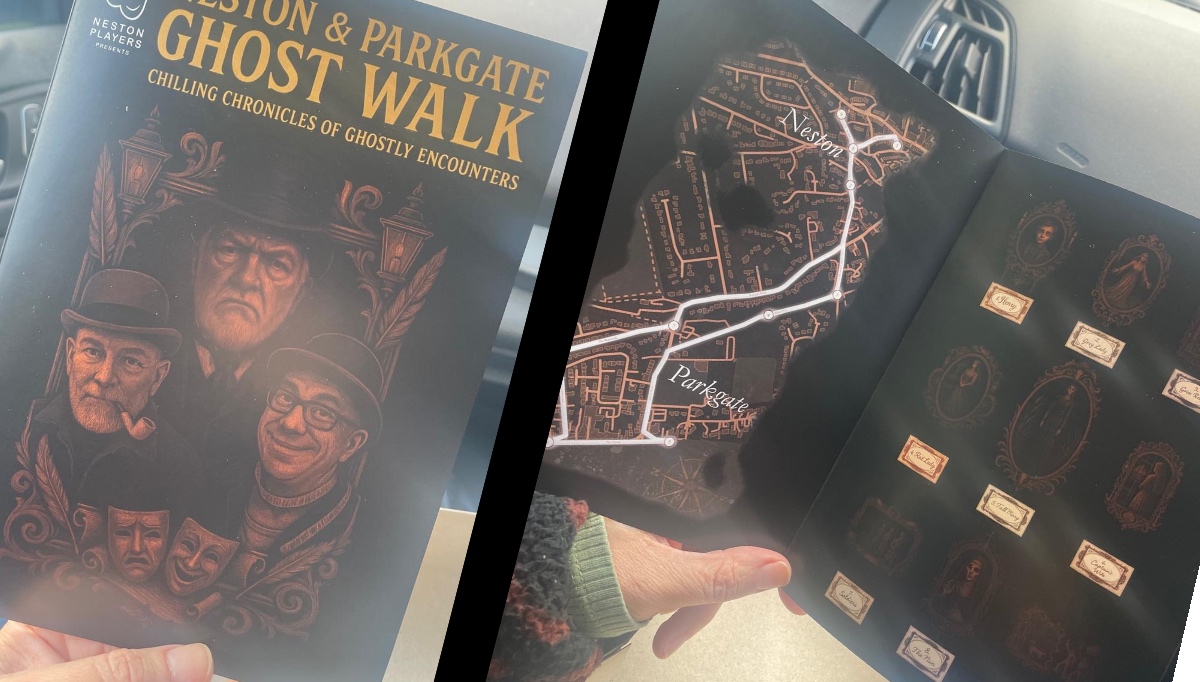
A Single Visual Language
The most important outcome was not any individual projection, illustration or map.
It was the ability to create a consistent visual language across every touchpoint of the experience. From printed materials and geographic data through to animation, projection and physical installations, every element contributed to the same narrative world.
For us, projects like this demonstrate the value of combining data, design and creative technology. The result is not simply information, artwork or software, but an experience that feels coherent, immersive and memorable.